
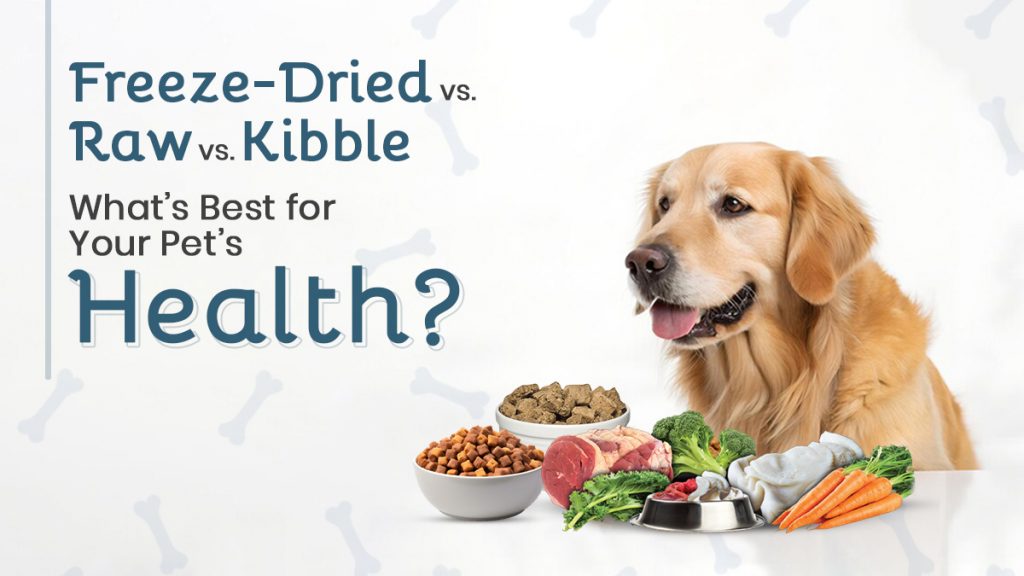

Ever found yourself stuck in the pet food aisle, eyes darting between a hundred bags? One says “ancestral,” another says, “shiny coat,” and suddenly, even you start doubting what the best pet food actually means. Every brand swears it’s the one. But feeding your pet isn’t about marketing, it’s about what keeps them feeling good, inside out.
In this blog, we’ll be talking about the three most popular types of pet food – kibble, raw, and freeze-dried! Let’s see how they differ in nutrition, convenience, and safety! With that, you’ll also get a clearer look into each option’s pros and cons, and how to decide what’s best for your pet (and your routine).
What are Kibbles?
Kibbles are basically the OG of pet food. Those crunchy little bits that sit in a container for months and still smell kind of okay to your dog or cat. It’s made by cooking a mixture of meat, grains, and vegetables at extremely high heat. The mixture is pressed into small pellets, then sprayed with oils or nutrients, and later sealed.
Why does everyone still buy it? It’s simple to use. Scoop, pour, and done! It’s also cheap, but the high heat while cooking kills some nutrients, and cheaper brands pack more fillers than real meat. So, yes, check the label before trusting the slogan.

Kibbles are convenient, yes. Perfect? Not really.
What is Raw Food?
Raw food means raw. As in fresh meat, bones, organs, and sometimes veggies. It’s supposed to mimic what animals would eat naturally. You’ll usually find raw food frozen, and it needs thawing, portioning, and cleaning up after. Honestly, it’s not a lazy-day option, but a lot of pet parents say it works wonders, like better digestion, cleaner stools, and shinier fur for our pets. Still, it’s tricky.
If it’s not balanced right, or if you don’t store it carefully, bacteria can sneak in. So you’ve got to handle it like real food, not just pet food. It’s great nutrition-wise, but not everyone’s routine-friendly.
What’s Freeze-Dried Pet Food?
Freeze-dried food is what happens when your pet wants the raw benefits without all the drama. The food starts raw, gets frozen, and then it’s slowly dried using air pressure instead of heat. All the nutrients stay, whereas the moisture goes.
It’s light, easy to store, smells like real meat, and your pet will probably lick the bowl clean. No fridge, no thawing, no mushy hands. All you need to do is just rehydrate with water if you want to make it softer.
And because there’s no moisture left, bacteria can’t easily grow – though you still need clean handling.
Comparison Table

Each of them works for different lifestyles. None’s a villain.
So, Which One’s “Best”?
Honestly, it depends on your pet and your lifestyle. Some pets do great on raw, others need the simplicity of kibble. A lot of people mix freeze-dried toppers with kibble and it’s like having the best of both worlds.
When thinking about how much to feed your dog or what to feed your pet, consider their age, weight, and energy. You can read more on our Healthy Foods for Dogs guide.
For tummy upsets or sensitive digestion, check CanadaVetExpress – we’ve got supplements and diet support options that help keep things stable.
Kibble, Raw & Freeze-dried Pet Food – Myths & Facts
Myth: Kibble cleans teeth.
Fact: Not really. It’s like saying chips clean human teeth. They scrape a bit, sure, but brushing still wins. A soft brush or a dental chew once in a while keeps things way cleaner.
Myth: Raw food is dangerous.
Fact: It can be, if you just toss raw meat in a bowl and hope for the best. But if you buy clean meat, store it right, and prepare it safely, it’s fine. We mean, humans eat sushi and tartare. It’s the same logic.
Myth: Freeze-dried food is just fancy kibble.
Fact: No. It’s actually raw food that’s been dried slowly without heat, so the nutrients stay put. Think of it as raw food’s low-effort cousin, where you just add water and it’s good to go.
Myth: Mixing foods messes up digestion.
Fact: Not if you introduce things right. Sudden change? Yes, that causes issues. But gentle mixing over a week or so is usually fine.
Frequently Asked Questions
Can you mix kibble and freeze-dried food?
A. Absolutely. Do it when you want to stretch the budget or just wish to make meals less boring. A few freeze-dried chunks add flavor and nutrients.
How do you switch diets without chaos?
A. Transition slowly. Start by adding a little of the new food to the old one for about a week. Sudden changes can upset sensitive stomachs.
Can puppies or kittens eat raw food?
A. They can, but only if it’s balanced. Growing bodies need exact ratios, not guesswork. So, either get a pre-balanced raw formula or talk to your vet.
Which option works best for busy pet parents?
A. Good kibble. Maybe toss in freeze-dried bits or bone broth now and then. It keeps your pet excited, and you won’t lose your mind trying to prep raw meals at 8 a.m.
How do you know if your pet’s food is actually working?
A. A shiny coat, consistent energy, and regular stools are good signs. When the food suits them, you’ll notice the difference.
How should you store freeze-dried food?
A. Keep it sealed and dry. Once you add water, don’t leave it out and it’s raw again. Basically, treat it like fresh food after rehydrating.
Is brushing really necessary if your pet eats kibble?
A. Yes. Kibble doesn’t scrub plaque, no matter what the ads say. Think of it like eating crackers – your teeth still need cleaning after.
Is raw food safe to handle?
A. If you’ve ever cooked chicken, you already know how. Wash your hands, wipe the counter and don’t reuse the same knife without cleaning. That’s it.
On a Final Note,
At the end of the day, pets don’t care about buzzwords. They care about how the food makes them feel. Watch them. Adjust when needed. And don’t get bullied by fancy packaging or internet debates around the best pet food. You’ll figure out what works; they’ll tell you with wagging tails and clean bowls.