
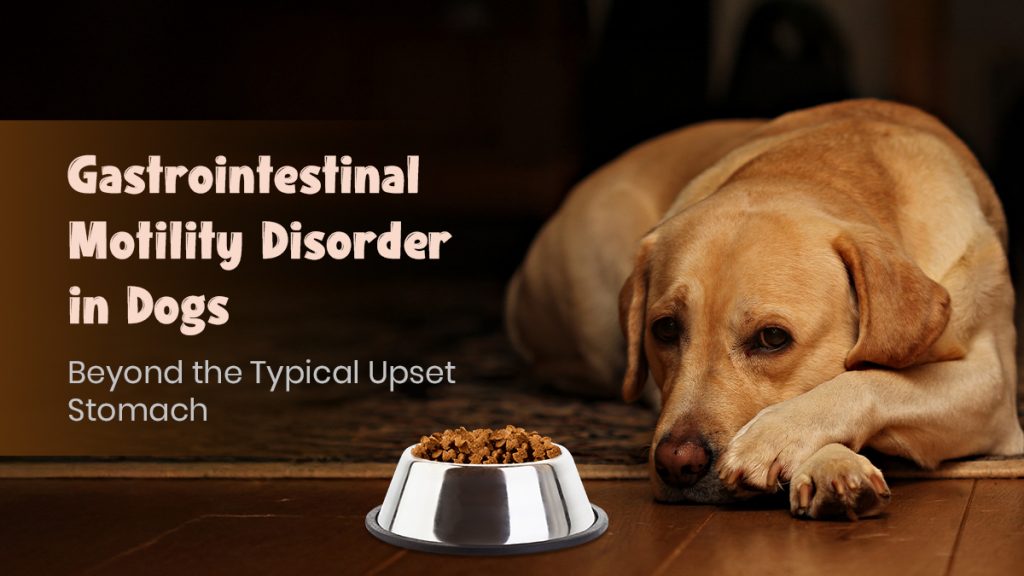

If your dog is bloating after eating, vomiting undigested food, or showing signs of slow digestion, it could be more than just a sensitive or upset stomach. These signs indicate the possibility of a lesser-known but serious digestive condition in dogs, called Gastrointestinal Motility Disorder. The condition can lead to a range of uncomfortable and dangerous symptoms that must be addressed at the earliest.
In this blog, we’ll discuss this condition in detail, covering the fundamentals, causes, and common symptoms. We’ll also cover the diagnosis and suitable treatment options to equip you with the right knowledge. This will help you navigate the condition better and get your pet the help they need.
Let’s start with the fundamentals!
What is Gastrointestinal Motility Disorder in Dogs?
Gastric motility essentially refers to typical peristaltic (wavelike) movements of the stomach muscles. These movements assist in breaking down food, absorbing nutrients and eventually eliminating the waste from the body. The normal motility function, on average, empties the stomach within 6 to 8 hours. However, when this movement is too slow or irregular, the normal functioning is disrupted, which is called gastrointestinal motility disorder.
Excessive gastric motility with frequent movement causes pain, while lower motility may lead to fluid and food retention, upset stomach, and distended stomach. These symptoms may surface at any age, but they are more commonly observed in older dogs.
To a dog parent, motility disorder might look like:
- A dog with slow digestion
- A dog vomiting food soon after eating
- A dog with delayed gastric emptying
- A dog with a bloated stomach after meals
Causes of Gastrointestinal Motility Disorder in Dogs
Primary GI Motility Disorders are often idiopathic in nature, meaning the origin is unknown. Here are the secondary causes of this condition:
- Stress or trauma
- Hypokalemia
- Hypothyroidism
- Hepatic encephalopathy
- Gastritis
- Gastric ulcers
- Gastroesophageal reflux
- Parvovirus infection
- Use of certain drugs
- After gastric surgery
- Too much urea in the blood
Symptoms to Watch Out for
When a dog is suffering from Gastrointestinal Motility Disorder, they exhibit a range of behavioral and stomach-related issues. Let’s look at some of the common symptoms:
- Chronic vomiting
- Delayed stomach emptying
- Bloating after eating
- Slow digestion
- Stomach discomfort and pain
- Swollen stomach or abdomen area
- Lethargy
- Diarrhea
- Belching
- Nausea
- Changes in appetites
- Weight loss
- Dehydration
If your dog exhibits some or all of these symptoms, a visit to the vet is necessary.
Diagnosis of Gastrointestinal Motility Disorder
The diagnosis of GI motility disorder isn’t always straightforward. Most likely, your vet will start with a physical examination and an inquiry about your dog’s symptoms, eating habits, lifestyle, and overall behavior. For further diagnosis, they will conduct complete blood testing, urinalysis, and an electrolyte balance profile to check dehydration and electrolyte imbalance.
They may also get abdominal X-rays or ultrasounds to take a closer look at the stomach’s movements or an endoscopy to look for blockages, masses, tumors, or abnormal cells. It can also help them collect a tissue sample for biopsy.
Depending on these results, the vet will draft a suitable treatment plan for your dog’s condition.
Treatment of Gastrointestinal Motility Disorder
The treatment depends on the underlying causes and the severity of the condition. Generally, hospitalization is not needed but may be recommended in serious cases. Here are some of the approaches that your vet may go with:
Dietary changes: To manage the condition, the vet may recommend switching to easily digestible food and feeding smaller, more frequent meals.
Prokinetic drugs: Prokinetic drugs can help stimulate the stomach motility and support natural digestive functioning.
Addressing underlying causes: The vet will take adequate measures to manage the condition if it is linked to hypothyroidism, liver disease, or other health conditions.
Fluid Therapy: Dogs with chronic vomiting and diarrhea may experience electrolyte imbalance and dehydration. In such cases, fluid replacement may be recommended to improve their condition.
Surgery: If the condition cannot be resolved by any other method, surgery is the last resort. This is mainly required for blockages and serious gastric obstructions.
The Bottom Line
Gastrointestinal motility disorder is not very common but is a serious condition that requires professional attention. So keep in mind the information covered in this blog to help your pet in their moment of distress. Good luck!
Want more trusted pet-care insights? Explore our blogs to keep your pets healthy and happy.