
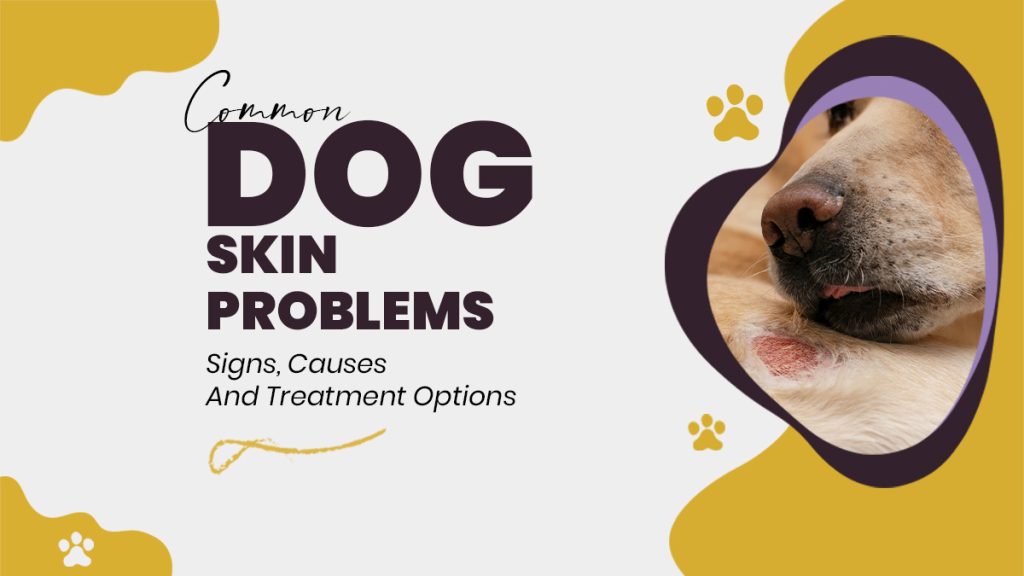


The USA features a diverse range of climates, from the arctic cold of Alaska to the tropical heat of Hawaii. These varied climates can contribute to environmental factors that may affect a dog’s skin like allergic reactions, parasitic infestations, fungal and bacterial infections. Therefore, as pet parents, it is crucial that we have a clear understanding of the skin problems that our dogs may experience to recognize potential problems and seek appropriate veterinary care when needed. In this blog, we will walk you through the common dog skin issues and also discuss their signs, causes, and ways to effectively manage them.
Let’s get started!
Common Skin Problems in Dogs
Let’s look at some of the common dog skin problems.
Parasitic Infestations
Dogs of all breeds are susceptible to parasitic infestations. External parasites such as fleas, ticks, and mites can affect skin and coats of dogs and may cause itching, skin irritation, hair loss, and, in some cases, secondary bacterial infections.
Thankfully, many external parasites can be controlled with the help of appropriate oral or topical parasite-control treatments. Some of the popular parasitic treatments include Frontline for Dogs, Bravecto Topical for Dogs, and NexGard Chewables.
Allergic Reactions
Dogs can develop allergic reactions to environmental allergens like pollen, mould, certain food ingredients, or flea bites. When a dog reacts to an allergen, the immune response can contribute to itching, inflammation and skin discomfort. Identifying potential triggers and reducing exposure where possible is one of the most effective ways of managing allergic reactions.
If your dog is experiencing an allergic reaction, formulas like Dorwest Skin Balm for Dogs and Cats and Ecovet Eco – Allergy Liquid can be used as part of a skin-care routine for relief.
Bacterial Infection
Bacterial infection in dogs is caused by the overgrowth of normal skin bacteria. Common signs may include scaly red patches, moist skin, pustules, red bumps, and inflammation. Bacterial infection can also develop from external bacteria entering the skin through wounds or breaks in the skin. If you suspect that your dog is experiencing bacterial infection, you should seek your veterinarian’s help for recommendations on appropriate approach.
Depending on the diagnosis and recommendation, your veterinarian may recommend an antibacterial shampoo such as Malaseb Shampoo to keep your pet’s skin clean and aid in the recovery from bacterial infections.
Yeast Infection
Yeast infection in dogs is caused by an overgrowth of yeast organisms on their skin. The infection causes itchiness, accompanied by redness and a musty odor. Yeast infection in dogs can be effectively managed with the help of vet-recommended topical or oral antifungal treatments, depending on the intensity of the infection.
Ringworm
Contrary to its name, ringworm infection is not caused by a worm. It is a fungal infection that can affect dog’s hair, skin, and claws. Common signs of ringworm include dry skin, hair loss, and broken hairs.
Ringworm is highly contagious and can easily spread between infected animals and people through direct contact or contaminated objects like bedding, dog grooming essentials, etc. Ringworm infection in dogs can be managed with the help of topical or oral treatments, prescribed by the veterinarian.
Skin Cancer
Skin cancer in dogs can have different underlying causes, and risk factors vary depending on the type of tumor. It is also one of the most alarming health concerns among dogs in the USA. Therefore, if you happen to spot any unusual or persistent lump, growth, or change on or under your pet’s skin, you should urgently get it checked by the veterinarian.
Depending on the findings, the veterinarian may conduct a biopsy or other diagnostic tests to determine the nature of the growth. Treatment depends on the type, location, and extent of the tumor and may include surgery or other treatments recommended by the veterinarian.
Frequently Asked Questions
Q. Can dog skin problems spread to humans?
A. Yes, conditions like ringworm and certain types of mange can pass to humans through direct contact or via contaminated objects.
Q. How often should I bathe my dog?
A. Bathing needs of a dog depends on coat type, lifestyle and skin condition. Bathing too frequently may dry or irritate the skin in some dogs, while others may need more frequent bathing based on their coat, lifestyle, or skin-care needs. It is best to check with your veterinarian for an expert’s advice.
Q. Can I use human skin care products on my dog?
A. No. Human skin-care products shouldn’t be used on dogs unless specifically advised by the veterinarian.
Bottom Line
Most dog skin conditions are not medical emergencies, but some require prompt veterinary attention. If you happen to spot persistent redness, discoloration, lumps, hair loss on your dog’s skin, followed by self-trauma like chewing or scratching, you should seek veterinarian help. Most skin problems in dogs can be managed effectively if diagnosed on time.
At CanadaVetExpress, we carry a wide range of dog skin-care products to address skin problems in dogs. Check out our online store to get your hands on your preferred products from the comfort of your home.