
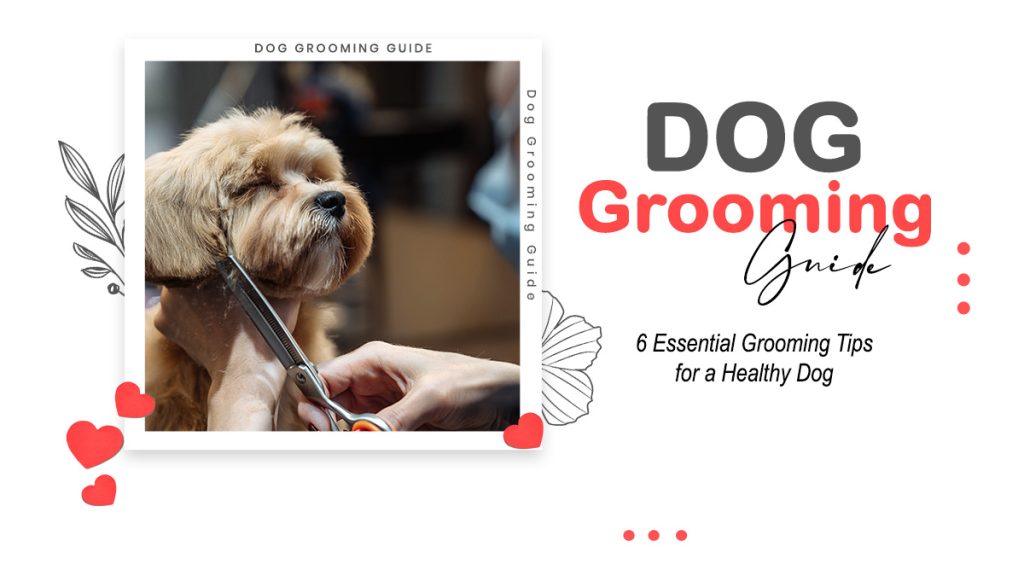
Grooming your dog isn’t only about keeping their coat trimmed. It also involves maintaining their skin, ears, eyes, feet, teeth, and nails. Regular grooming helps keep your dog healthy inside and out and is an important part of preventive care.
If you’re learning how to groom your dog at home, this grooming guide covers the basics you should know to get started. Start small, keep sessions positive, and work your way through these six grooming areas.
1. Skin & Coat Care
Why it matters:
Your dog’s skin and coat care routine should involve regular brushing and bathing. Brushing removes loose hair and dirt while helping distribute natural oils through the coat. It can also reduce mats and give you a chance to check for common dog skin problems like dry skin or irritation and parasites like fleas and ticks.
How to start:
Brush according to your dog’s coat type. Short-haired dogs may need brushing once a week, while long, curly, or double-coated dogs often need it more frequently. Use a dog shampoo and conditioner to bathe them when their coat is dirty or as recommended by your veterinarian.
What grooming essentials you’ll need:
- A suitable brush or comb
- Dog shampoo
- Dog conditioner
- Non-slip bath mat
- Dog deodorant
2. Eye Care
Why it matters:
Keeping the area around your dog’s eyes clean can help prevent build up of dirt and tear residue and lets you notice problems such as excessive tearing, redness, swelling, or discharge. Moreover, regular cleaning may also help prevent the development of stubborn tear stains in some dogs.
How to start:
Gently wipe the area around the eyes with a clean, damp cloth or a veterinarian-approved eye wipe. Always use a separate clean area of the cloth or wipe for each eye. If your pet has tear stains, use a vet-recommended tear stain remover as directed on the product label. Never use products meant to treat human eye conditions.
What grooming essentials you’ll need:
- Soft cotton cloth
- Pet-safe eye wipes
- Tear stain remover
- Eye wash/eye cleaner solution
3. Ear Care
Why it matters:
Regularly checking your dog’s ears can help you notice signs of potential problems, such as unusual odor, discharge, excessive scratching, redness, or swelling. Regular ear care can help you keep their ears clean, healthy, and odor-free. Dogs with floppy ears, or allergies, or those that go for frequent swimming, may require more frequent care.
How to start:
Some dogs may have naturally clean ears with little effort, while others, especially breeds with floppy ears, may need frequent ear care. If your veterinarian recommends routine cleaning, use a dog ear-cleaning solution and gently massage the base of the ear before allowing your dog to shake their head. Wipe away loosened debris from the visible outer ear.
What grooming essentials you’ll need:
- Ear cleaning solution
- Cotton balls or gauze
- Pet-safe ear wipes
4. Nail Care
Why it matters:
Overgrown nails can affect how your dog walks and may become painful or snag on surfaces. Keeping your dog’ snails at a comfortable length by trimming them regularly helps support normal movement and prevent nail breakage.
How to start:
You can use a nail clipper or grinder to trim your dog’s nails. This will require a lot of patience and skill, especially if you are new to it. Allow your dog to sniff the tool, reward them, and gradually touch each paw to trim slowly. Trim only small sections at a time and avoid cutting into the quick, the area that contains blood vessels. Take help from a professional groomer if you find it hard to do it comfortably and safely.
What grooming essentials you’ll need:
- Nail clippers
- Nail grinders
- Nail file
- Styptic powder (to stop accidental bleeding)
5. Paw Care
Why it matters:
Many pet parents do not give much importance to paw care but your dog’s paws take a lot of daily wear. They can be exposed to harsh surfaces, snow, rocks, and even de-icing salts. Checking them regularly can reveal cracked paw pads, cuts, foreign objects, or irritation between the toes.
How to start:
Gently clean your dog’s paws after outdoor visits using a damp towel. After walks, especially on hot, icy, rough, or chemically treated surfaces, check between the toes and paw pads for any foreign objects or injuries. Keep excess hair around the feet neatly trimmed if your dog’s coat is long.
What grooming essentials you’ll need:
- Soft towel
- Pet-safe paw wipes
- Paw balm
6. Dental Care
Why it matters:
Dental care is one of the most important parts of grooming. Regular brushing helps reduce plaque build up and bad breath and supports better oral health. It may also help reduce the risk of dental problems, such as gingivitis, periodontal disease, and tooth decay.
How to start:
Go slowly when starting dental care for your dog. First, let your dog get comfortable with having their lips and teeth touched. Then introduce a toothbrush and veterinary-approved dog toothpaste. You can also offer dental chews and dental toys to support their dental hygiene, but they shouldn’t replace regular dental care or professional veterinary examinations.
What grooming essentials you’ll need:
- Dog toothpaste
- Dog toothbrush
- Dental toys
- Dental chews
In a Nutshell
A dog grooming routine doesn’t have to be complicated. Follow the simple grooming tips discussed in this blog and use the right dog grooming products. Most importantly, always reward your dog with treats, praise, and a lot of love for being calm during the grooming sessions. And if you notice changes in their skin, hair loss, eye discharge, or dental problems, consult your veterinarian promptly.
Make Everyday Pet Care Easier
From grooming essentials to everyday wellness needs, explore a wide range of pet care products available at CanadaVetExpress.