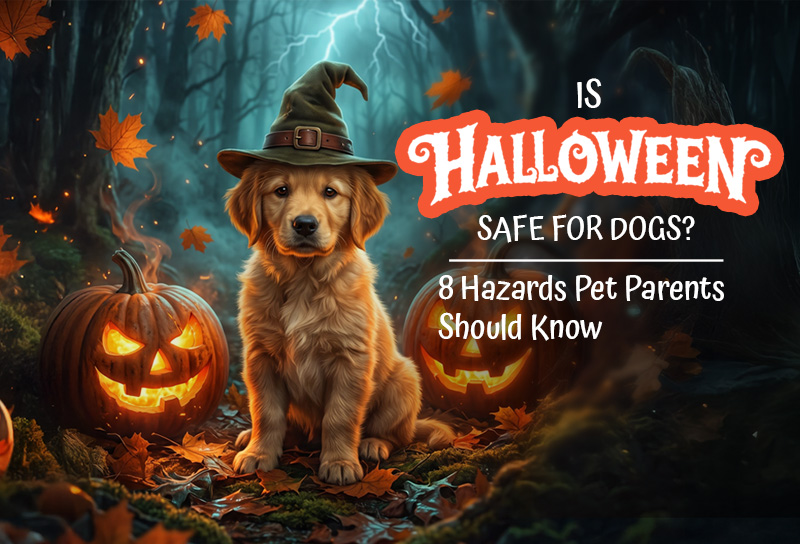
Is Halloween safe for dogs? It can be, with some planning. Most dogs get through the night without trouble, but the holiday packs several known risks into a few hours: candy within reach, open flames, costumes, a front door that keeps opening, and a steady stream of unfamiliar faces. Constant knocking, doorbells, and strangers in costumes and masks at your door can stress pets and give them chances to slip out, making Halloween a genuinely spooky experience for you and your pet. Many of these risks can be reduced with appropriate preparation. Here are 8 hazards worth knowing about so that you can protect your pets in this Halloween season.
What Are the Biggest Halloween Hazards for Dogs?
1. Is chocolate really dangerous for dogs?
It can be. Chocolate in all forms, especially dark or baking chocolate can be very dangerous for dogs. Darker chocolate contains a higher concentration of methylxanthines (chemicals related to caffeine and theobromine) which are toxic to dogs. Your pet can develop toxicity depending on the amount and type of chocolate ingested.
The practical fix is distance. Keep candy bowls and trick-or-treat bags on high counters or safely secure in a closed cabinet so your fur baby cannot get to them.
2. Can sugar-free candy contain xylitol?
Xylitol is a sweetener found in many sugar-free gums, mints, and candies. It can cause a rapid drop in blood sugar (hypoglycemia) and, depending on the amount, even liver failure in dogs. Xylitol ingestion can be potentially life-threatening for dogs.
You won’t be able to tell what a treat or piece of candy contains just by looking at it. Read ingredient labels before leaving any candy where your dog can reach it, and store xylitol items with the chocolate. If your dog does eat any, contact a veterinary professional right away.
3. Are raisins and grapes dangerous for dogs?
Yes, sometimes. Well-meaning neighbors hand out mini boxes of raisins and chocolate-covered raisins as a healthy treat, but they are extremely poisonous to pets. Even relatively small amounts of raisins, grapes, or currants can cause serious kidney issues in dogs. Because some dogs are more sensitive than others, any ingestion is a reason to call your veterinarian immediately.
It is also recommended to treat raisins like chocolate: pull them out of treat bags and keep them in a secure container, far from your pet.
4. Can candy wrappers hurt my dog?
Yes, even if you give your dog a pet-safe candy, packaging can still pose a serious risk. Foil and plastic wrappers can lead to choking hazards or intestinal obstruction if swallowed.
Wrappers tend to end up on the floor by the end of the evening, so include a quick clean-up into your routine. Sweep up dropped wrappers and sticks regularly, and use a trash can with a lid.
5. Is it safe to put my dog in a Halloween costume?
Only if your dog genuinely loves it. If you do dress your dog up, the costume should fit properly and not restrict vision, hearing, breathing, mouth opening, or movement. Your dog’s costume should not have any small or dangling parts that could be easily chewed off or swallowed.
Let your dog try the costume on before Halloween so they can become comfortable, and never leave a costumed dog unsupervised. If your dog looks distressed, take it off; you can consider letting them wear their favorite suit instead.
6. Are Halloween decorations a risk to dogs?
Yes. A curious nose can easily knock over a lit candle or jack-o’-lantern, which can cause burns or become a fire hazard. Glow sticks and glow jewelry can also attract curious pets. While glow-stick contents are generally not systemically toxic, they can cause mouth pain and irritation, as well as profuse drooling and foaming if chewed.
Keep all lit candles, jack-o’-lanterns, glow sticks, glow jewelry, and other small decorations safely out of your pets’ reach.
7. Could my dog slip out the front door?
It happens more easily than most people expect. The constant opening and closing of the door gives pets chances to escape. On Halloween, there are a lot more people on the streets, and that, combined with strange costumes, can spook pets and make them bolt.
Make sure your dog wears a collar with an ID tag and that their microchip information and contact details are current. If your dog spends time outdoors during Halloween, remember to keep up with their regular dog flea and tick treatment to help protect them from parasites.
8. How can I keep my dog calm on Halloween?
All of the noises of knocking, doorbells ringing, children shouting “trick or treat,” and the frequent opening and closing of the door can stress pets. Even normally sociable dogs may experience intense anxiety over the number of strangely dressed visitors.
Set up a quiet room, away from the front door activity, with a bed, water, and their favorite toy. If your pet is wary of strangers, give them a safe hiding place during trick-or-treating hours.
Also read this: How to Stop Your Puppy from Excessive Barking without Stress
Final Thoughts
So, is Halloween safe for dogs? Yes, with a plan. Secure the candy, keep flames, cords, and glow items out of reach, watch the front door, and give your dog a quiet place to wait out the noise. Most of the work happens before the first knock. If something does go wrong, call your veterinarian immediately to reduce the risk of serious complications.
Frequently Asked Questions
Q. Can I give my dog Halloween treats?
Ans. Human Halloween candy should be avoided. If you want your dog to join in, choose treats specifically made for dogs.
Q. What should I do if my dog eats Halloween candy?
Ans. Contact your veterinarian right away, especially if the candy contains chocolate, xylitol, or raisins. Do not try to make your dog vomit unless a veterinarian tells you to do so.
Q. Can my dog go trick-or-treating with us?
Ans. Some dogs enjoy it, but crowds and costumes may unsettle them. If you take your dog trick-or-treating, use a reflective collar, a secure, non-retractable leash, and a proper identification tag, so that your dog can find their way back home in case you lose them in the crowd.
Q. Why is my dog barking at trick-or-treaters?
Ans. Dogs may bark for many reasons, such as being excited, frightened, alerting you to unfamiliar visitors, or reacting to the activity outside, which may be normal on Halloween.
If your puppy continues barking even after Halloween, understanding why puppies bark excessively can help you identify common triggers and decide what to do next.