


Fleas are tiny, but they can cause big problems for our pets. From itching to allergies and disease transmission, these wingless creatures can seriously affect their health. A pet may start scratching one day, and before you know it, fleas can establish their population inside your house.
Killing the fleas you can see is only part of the job. Most of the flea population in an established infestation is found off the pet, in immature life stages in your carpets, bedding, and furniture. Here’s how to spot a flea infestation in cats and dogs, why it keeps coming back, and how you can getrid of it.
What is a Flea Infestation?
A flea infestation is a full-fledged population of fleas that establish themselves on a pet and in its environment. Adult fleas live and feed on the pet, while flea eggs, larvae, and pupae are usually found in the environment.
Fleas can enter your house or reach your pet through other animals, wildlife, visitors, or previously infested environments. Once inside a warm home, fleas multiply quickly and can continue developing throughout the year.
Signs of Flea Infestations in Dogs and Cats
Some pets show obvious signs, while others may have fleas without much scratching. The reaction depends partly on how many fleas are present and how sensitive the individual pet is to flea saliva.
These are some common signs of fleas on dogs and cats:
- Frequent scratching, licking, or biting
- Red, irritated skin
- Small bumps on skin (flea bites)
- Hair loss or thinning furdue to scratching
- Flea dirt (black or reddish-brown specks)
- Visible fleas
Adult fleas are often difficult to spot as they move quickly through the fur. Flea dirt (flea poop), which can be identified with a wet towel test,is a clear sign that fleas are present.
How to Check for Fleas on Pets?
1. Perform a wet towel test for fleas:
Follow these simple steps at home to confirm the presence of fleas:
- Check the areas on your pet’s body where fleas prefer to hide, such as the lower back, belly, neck, base of the tail, behind the ears, etc.
- Collect a small sample of flea dirt (which looks like pepper) and put the collected specks on a damp paper towel.
- Allow the specks to interact with water present in the towel for a minute or so.
- If the flea dirt dissolves into a reddish-brown streak, the specks are most probably flea dirt.
Flea dirt is basically digested blood, so it will leave a stain on the towel, whereas regular dirt won’t.
2. Run a flea comb through the fur:
Run a fine-toothed flea comb through your pet’s coat, paying attention to the back and area around the tail. Make close passes against the skin and check the comb after each pass.
If you notice any black or brown specks on the comb, conduct a wet towel test. If you catch any live adult fleas, put them directly into your bowl of soapy water to prevent them from jumping back onto your cat or dog’s fur.
Flea Life Cycle: Why Fleas Keep Coming Back?
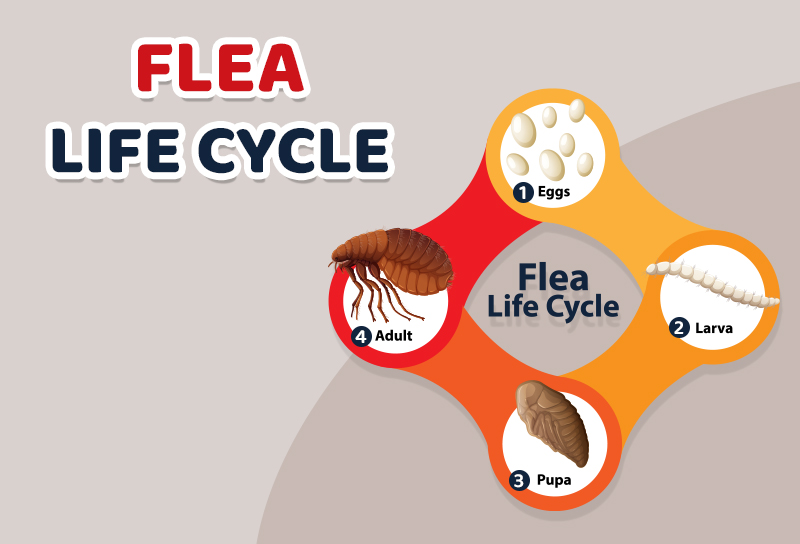
A flea infestation isn’t just an adult-flea problem. The flea life cycle has four stages:
Egg → Larva → Pupa → Adults
Adult fleas feed on your pet’s blood to become mature and lay eggs. Those eggs quickly fall into the environment, where larvae develop. Larvae eventually form pupae inside protective cocoons.
Adult fleas then emerge from cocoons when environmental conditions are suitable and a host is present. Adult female fleas can begin to mate and lay eggs within a few hours of emerging from the cocoon.
Sometimes, you might still see fleas after treating your pet. This doesn’t necessarily mean you are seeing a treatment failure. New adult fleas may be emerging from pupae already present in your home. That’s why flea control can sometimes take weeks or even months when an infestation is well established.
How to Get Rid of Fleas on Dogs & Cats?
Effective flea control usually requires a flea treatment for the pet and addressing the environment at the same time. Here’s how you can control a flea infestation effectively:
1. Treat every pet in the household.
If you have multiple dogs and cats, talk to your veterinarian about an appropriate flea-control product for each animal. They can suggest the right treatment based on the pet’s species, age, weight, health, and lifestyle.
Never assume that a product safe for dogs is also safe for cats. Some dog flea treatments contain ingredients that can be dangerous to cats. Always check the label and use products only for the species, age, and weight range specified.
Flea treatments are available in various forms, such as topical treatments, oral chews, and collars. You can check with your veterinarian about the suitability of these popular options for your pet:
- Flea Treatments for Dogs: NexGard Chewables, Frontline Plus for Dogs, SerestoDog Collar
- Flea Treatments for Cats:Frontline Plus for Cats, Bravecto Plus, Revolution for Cats
2. Get rid of fleas in your environment.
Wash pet bedding regularly and vacuum areas where your pet sleeps, rests, or spends time. Focus on areas where fleas can hide easily, such as carpets, bedding, upholstery, cracks, pet beds, and areas under the furniture.
For severe infestations, your veterinarian or pest-control professional may recommend an appropriate environmental treatment.
3. Follow the treatment routine consistently.
Don’t stop flea prevention just because you stop seeing fleas. Pupae can remain protected in the environment and emerge later. A household infestation may take several months to fully control, particularly when the infestation is heavy.
Follow a regular flea prevention routine for your cat or dog as suggested by your veterinarian. Missing doses can increase the chances of reinfestations.
Final Words
Flea control and prevention is an ongoing process for most dogs and cats. Stay consistent with your vet-recommended flea and tick treatment, address the fleas in your house, and consult your veterinarian if you spot any signs of disease.
Once you understand the flea life cycle, those frustrating “fleas are back” moments make a lot more sense. And with the right preventive plan, you can break the cycle before a few unwanted hitchhikers turn into a full-blown infestation.
Frequently Asked Questions
What do fleas on dogs look like?
Fleas look like tiny, brown, wingless insects on your dog’s coat. They are about the size of a sesame seed and can run and jump quickly through the fur. Flea dirt or flea poop is often spotted as black pepper specks on the skin or bedding.
Can indoor cats get fleas?
Yes. Indoor-only cats can still encounter fleas brought into the home or acquire them from an infested environment. Fleas can also survive inside warm homes year-round.
How long does it take to get rid of fleas?
It depends on the severity of the infestation, the products used, and environmental conditions. Established infestations can take several months to fully control because immature flea stages may remain in the environment.
How to prevent fleas on dogs naturally?
There’s no proven natural remedy for preventing fleas on dogs. Always use a vet-recommended flea treatment for your dog, based on their weight, lifestyle, and health history.
What should I do if my pet still has fleas after treatment?
Don’t automatically apply another dose or switch products. Reinfestation from the environment is common, as flea eggs and larvae may still be present on your furniture, carpets, etc. Check whether every pet is receiving appropriate prevention, keep your surroundings clean, and speak with your veterinarian if fleas persist.


